
Thursday Commentary
South Africa’s sugar levy: lessons for Kenya on design, evidence and political pressure
Karambu Muthaura ·
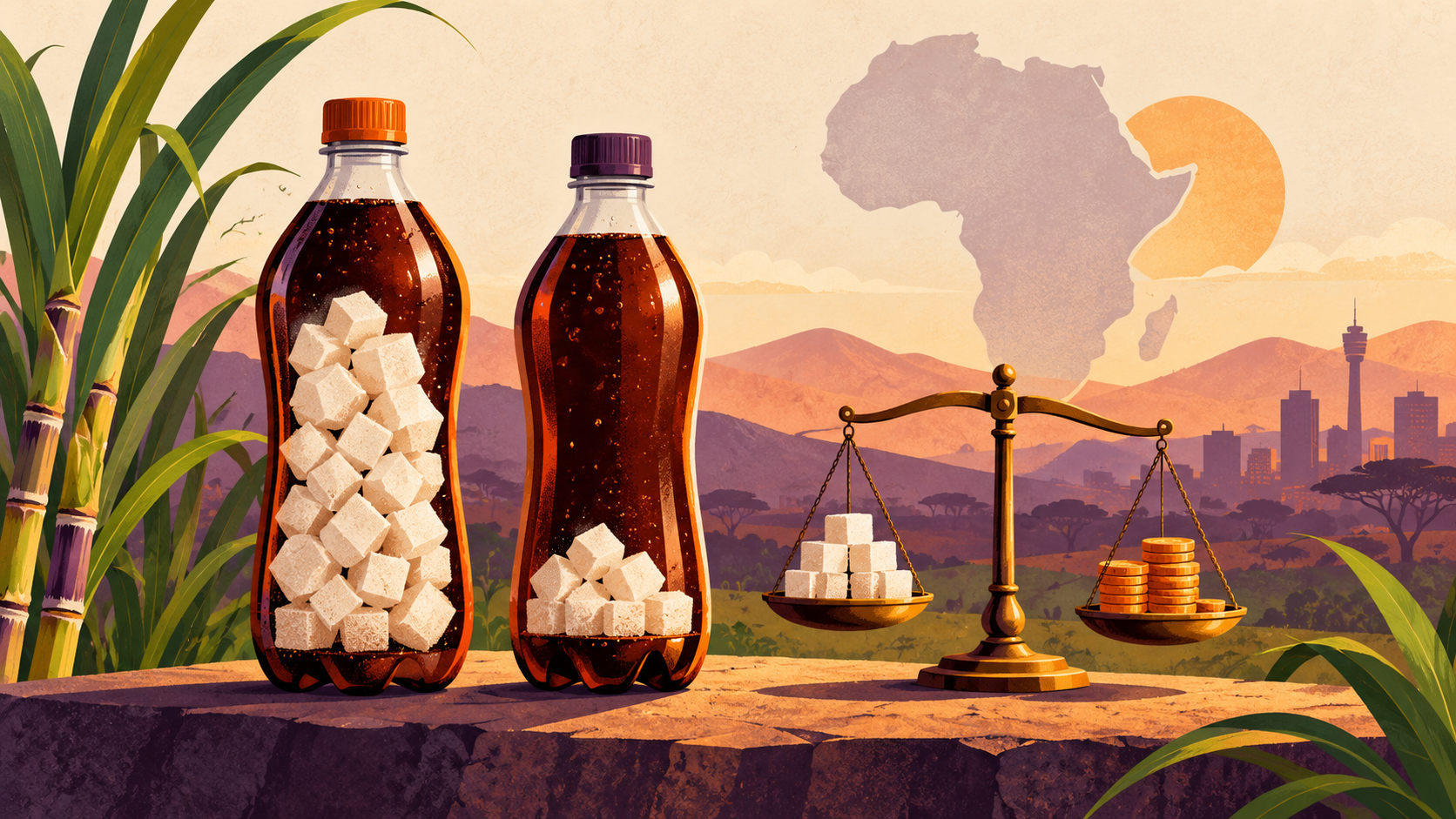
South Africa’s Medium-Term Budget Policy Statement, delivered on 21 October, brought renewed attention to a familiar contest: how to balance public health, industry adjustment and revenue. The debate around its Health Promotion Levy on sugary drinks is one every African finance ministry should study, Kenya’s included. [1]
The useful lesson is broader than whether a particular budget raises a rate. A health tax needs a clear design, evidence that is read carefully, and a mechanism to preserve its effect over time.
A tax that rewards reformulation
South Africa introduced the levy in April 2018. It taxes sugar above a threshold of 4 grams per 100 ml, rather than simply charging the same amount on every litre of a covered drink. [2]
That design matters. A manufacturer who reduces taxable sugar reduces the levy payable. Consumers may buy less, but producers also have a reason to change the product itself. A sound health tax can work through both channels.
What the evidence actually shows
A study of purchases by more than 3,000 households, published in The Lancet Planetary Health in 2021, estimated reductions of 51% in sugar, 52% in calories and 29% in volume purchased from taxable beverages, compared with a counterfactual based on trends before the levy was announced. These are model-based comparisons, not simple before-and-after percentage changes. Lower-income households recorded larger reductions. [3]
A separate before-and-after study in Langa, Cape Town, examined young adults in a low-income community. Sugar intake from taxed drinks fell by 31%. The researchers attributed about 22 percentage points to changes in consumption and nine to reformulation. [4]
These studies use different methods and examine different populations. Neither alone proves the levy’s long-term effect on disease. Together, they support the case that a sugar-based tax can change purchases, consumption and product composition.
Keeping the tax effective
SARS’s published 2026 budget guidance reports an increase of approximately 3.4% in the levy. An adjustment is useful, but its size and timing must be assessed against the policy’s health objective. [5]
The underlying policy concern remains. A fixed monetary charge loses purchasing power when it is not adjusted for inflation. Even inflation adjustment may not prevent drinks becoming more affordable if incomes grow faster. Governments should monitor prices and affordability, alongside revenue, sugar content and consumption.
WHO’s 2026 assessment warns that weak taxes leave sugary drinks too affordable. Its “3 by 35” initiative calls for countries to raise the real prices of tobacco, alcohol and sugary drinks by at least 50% by 2035 through health taxes. That is an ambition for sustained price change, not a claim that every country needs an identical tax rate. [6, 7]
Reading the jobs argument seriously
Employment concerns deserve a serious hearing and a serious test. Policymakers should ask what a study measures: jobs in cane farming, beverage production, distribution, or the economy as a whole. They should also ask what would have happened without the tax.
Imports, production costs, weather, changes in demand and corporate distress can affect the same industry at the same time. Observing a decline after a levy begins does not establish how much the levy caused. Equally, health advocates should be transparent about the assumptions behind their estimates.
Funding and conflicts of interest should be disclosed on all sides. Who commissioned a study is relevant; its methods, data and treatment of alternative explanations determine how much weight it deserves.
The health side also needs careful language. A 2026 modelling study in BMJ Public Health estimated that a 20% levy scenario, compared with its 11% baseline scenario, could avert about 619,000 new cases of type 2 diabetes and 26,000 deaths over 20 years. These are projected benefits under the model’s assumptions, not outcomes already observed. [8]
Kenya’s starting point has changed
Kenya’s beverage tax framework is evolving. KRA’s guidance on the Finance Act 2026 states that excise on bottled water was removed from 1 July. It also distinguishes fruit and vegetable juices without added sugar, at KES 14.14 per litre, from those with added sugar or sweeteners, at KES 20 per litre. [9]
Those distinctions matter. Removing excise from water and differentiating juices according to added sugar are meaningful changes in the structure of the tax.
There is still a policy question worth asking: could a tax linked more closely to sugar content strengthen the incentive to reformulate? A category-based charge per litre distinguishes products across categories. Within a category, however, reducing sugar may leave the tax unchanged. A per-gram structure, or carefully chosen sugar-content tiers, could make that incentive more direct.
KRA also identifies a KES 40 per kilogram rate for specified imported sugar, subject to exclusions. That measure and a health-oriented beverage levy address different policy questions. Support for domestic production should be assessed on its own terms, alongside the health effects of beverage consumption. [9]
Five practical lessons
Tax design should reward lower sugar content. Assess a per-gram or tiered approach, supported by clear definitions, credible testing and workable administration.
Preserve the tax’s effect over time. Build regular adjustment and affordability monitoring into policy, rather than relying on a fresh political contest every year.
Test employment claims consistently. Require transparent methods, disclose funding and examine the other forces affecting an industry.
Connect revenue to visible health priorities. Kenya should consider a transparent minimum funding commitment for noncommunicable disease prevention, treatment and research within Universal Health Coverage, with clear budget reporting and accountability.
Support farmers with measures suited to their needs. Evaluate diversification, productivity and value addition directly, while assessing trade measures against their wider costs and benefits.
South Africa’s experience gives Kenya a useful starting point. The task is to build a health tax that changes incentives, remains effective and earns public confidence through evidence and transparent decisions.
Sources
[1] South African Government: Medium-Term Budget Policy Statement, 21 October 2026
[2] SARS: Health Promotion Levy on sugary beverages
[4] Essman et al. (2021), PLOS Medicine: Taxed and untaxed beverage intake by South African young adults
[5] SARS: Budget 2026 frequently asked questions
[6] WHO: Cheaper drinks will see a rise in noncommunicable diseases and injuries, 13 January 2026
Join the conversation
Share a perspective, ask a question, or reply to a reader below.
No comments published yet. Be the first to share your perspective.
Leave a comment
Readers’ comments and replies are reviewed before publication. Please keep the discussion respectful and relevant. Your chosen name and comment will be public once approved. No email address is required.